


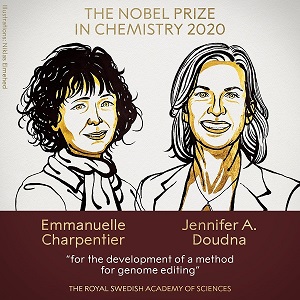
- The discoverers of the applications in genetic editing of the CRISPR molecular complex receive the award for their “genome editing method”
- The awarded method is based on the discoveries in archaea by Spanish researcher Francis Mojica from the University of Alicante
- This genetic editing method greatly enhances the development of new products and processes in plant production
BIOVEGEN – Technological Platform for Plant Biotechnology congratulates Emmanuelle Charpentier and Jennifer Doudna on being awarded the 2020 Nobel Prize in Chemistry “for the development of a method for genome editing”. The Royal Swedish Academy of Sciences recognizes a discovery made in fundamental research on bacteria, which has led to numerous high-impact applications in plant and medical sciences.
At BIOVEGEN, we are pleased with the award for CRISPR genetic editing tools given its enormous potential and advantages over traditional methods. However, we also regret the decision to exclude Francisco Juan Martínez Mojica, Francis Mojica, a microbiologist at the University of Alicante, from the awardees. The research of Francis Mojica and his discovery of a self-immunity system in certain bacteria in Santa Pola (Alicante) were fundamental to the development of this innovative tool, as he was the first researcher to discover DNA repeats interspersed with different sequences in an archaeon, proposing a possible function for this grouping of sequences. Additionally, he proposed the acronym CRISPR (Clustered Regularly Interspaced Short Palindromic Repeats), compiling CRISPR systems in bacteria and archaea, being the first to suggest that CRISPR systems in prokaryotes constituted the elements of a complex immune defense system.
In agrobotechnology, genome editing allows scientists and breeders to enhance plant varieties, from fruit and vegetable crops to legumes and cereals, which people rely on for their nutrition and health. This award-winning method enables precise and specific improvements in the genome of plants to achieve greater nutritional quality, resistance to abiotic/biotic stress, and environmental sustainability, among many other features of interest. Furthermore, it allows non-leading crops, where improvement efforts were previously low due to their limited market participation compared to the time and effort required for classic improvement methods, to benefit from new genomic techniques. In all cases, the resulting crops will contribute to environmental sustainability, which is crucial in light of climate change, as well as to nutritional and human health improvements.
At BIOVEGEN – the Technological Platform for Plant Biotechnology, we emphasize the need to improve European legislation in this area, so that the potential of genome editing to enhance crops is not limited and that European innovation agents (companies, research centers, etc.) and European society as a whole can benefit from the tremendous impact that these tools will bring to the plant production sector.
About BIOVEGEN
BIOVEGEN-Technology Platform for Plant Biotechnology is a public-private entity aimed at enhancing the competitiveness of the sector through the development of technologies derived from Plant Biology. To achieve this, it connects entities in the Spanish agrifood sector, matching the supply and demand for technology, and generating business opportunities through Science-Business collaboration. BIOVEGEN develops collaborations and R&D projects, and identifies technological challenges in the sector to develop technologies. It acts as an interface between the scientific community, businesses, and the Administration. To this end, it offers a series of tools to facilitate R&D&I activities for its members. Currently, it has 113 member entities: 95 companies, 18 research organizations, and the Ministry of Science and Innovation, which supports and co-finances the initiative. Additionally, BIOVEGEN is open to collaborations with other entities in the sector.