

- The PUA project generates the largest sound atlas in the world, with more than 30,000 hours recorded of sounds and ultrasounds emitted by tomatoes, soybeans, or peanuts, registering metadata processed by AI to schedule irrigation or combat pests like the Tuta absoluta
- IBMCP, the BIOVEGEN platform, and the Cajamar Group Foundation are making progress in an event attended by 300 researchers and entrepreneurs, marking a new era of biotechnology in the EU driven by the upcoming regulation for edited plants (NGTs) and modified microorganisms (MMGs)
- IBMCP, recognized as a ‘Severo Ochoa’ center of excellence, consolidates itself as a reference center in biotechnology: working with companies on more nutritious and tasty tomatoes, more productive and resistant rice to pyricularia, ‘sentinel’ plants to alert of viruses, or the regeneration of plants in vitro to facilitate their improvement with CRISPR
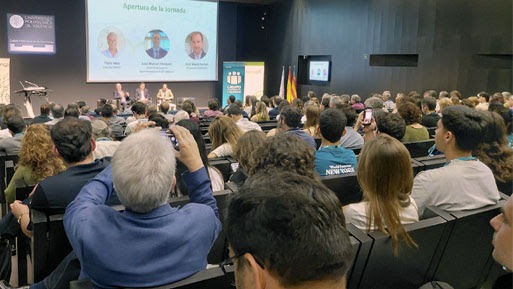
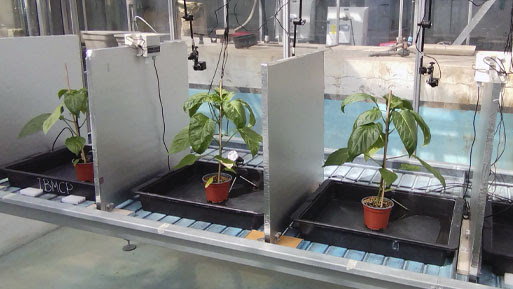
Valencia, 1-6-2026.- It is 1 PM on the past Thursday, and in front of nearly 300 researchers and entrepreneurs gathered in the Auditorium of the Blue Cube of the City of Innovation in Valencia, a video is played as part of a presentation titled ‘Listening to Plants’. Yes, the recording shown during the III Biotechnology Conference organized by the Institute of Cellular and Molecular Biology of Plants (IBMCP, a mixed center of CSIC and UPV), the Science-Business platform BIOVEGEN, and the Cajamar Group Foundation, reflects the ‘speech’ of a plant, how it emits imperceptible ultrasound to the human ear but captured by special microphones. They are ‘chirps’, perhaps, that increase in frequency as the lack of water sharpens, while the accelerated images simultaneously confirm how its leaves and stems wither. The scientific audience was astonished, even shaken, by the impact of the audio. The discovery of how stressed plants – not only by water but also by insect or fungal attacks – react and emit sounds was credited in 2023 by Tel Aviv University (Israel), but it has been the IBMCP that has generated the largest sound atlas of plants in the world after recording images and ultrasound of crops such as tobacco, tomato, pepper, cucumber… There are more than 30,000 hours, 450,000 ultrasonic records obtained, and just as many thousands of metadata (variety, genotype, plant age, temperature, air and soil humidity, soil pH, CO2…). Information that is processed by Artificial Intelligence (AI). And that is the added value of the subsequent research generated, which will allow programming an adjusted and automated irrigation to save resources, optimize yields, or even, conversely, emit ultrasound from the field to ward off moths, to combat pests as serious for tomatoes as Tuta absoluta, reducing phytosanitary . As explained by the project leader PUA (Plant Ultrasound Atlas), Javier Brumós, “selecting the less ‘talkative’ plants” will help identify “individuals more tolerant to drought” and locate the genes responsible for such traits to ‘edit’ their genome.
The case of Brumos was just an example of the upcoming biotechnology revolution in the EU, largely driven by the new regulation on New Genetic Engineering Techniques (NGT’s) which is expected to be ratified by Parliament in June-July but will not come into force until the ‘fine print’ is developed, in 2028. To this scenario, the reform would add inspiration also in the opening and flexibilization that this new regulation, regarding community legislation on genetically modified microorganisms (GMO’s), will entail. This was made evident during the meeting by Ana Judith Martín de la Fuente, secretary of the Interadministrative Council of Genetically Modified Organisms at the Ministry of Agriculture, who indicated that the regulatory adaptation ‘to the specifics of GMO’s’ and the opening of an accelerated procedure for some of these microorganisms could allow for the arrival of a new generation of biofertilizers, biostimulants – to improve soil fertility – or biopesticides – against pests, without chemicals. These would be bacteria, yeasts, microscopic fungi, microalgae… genetically edited to perform a function (such as producing a molecule, degrading a residue, or being used as additives, flavors, or to generate new foods). Unlike the improvement of plants through editing techniques like CRISPR, this field is still virgin in Europe, and in fact, despite the technology being available, the EU has not yet received any request to register any GMO event. The EFSA, the food safety agency, has already ruled out risks to the food chain, which would justify a shift in line with many existing regulations elsewhere in the developed world, towards legislation that is more flexible than the current one – which is that of transgenic organisms – and ‘based on the resulting product.’
Experts in technology transfer -such as the president of BIOVEGEN, José María Fontán; Carlos Baixauli, director of the Experiences Center of the Cajamar Foundation in Paiporta; Oriol Alcoba from ESADE, or Purificación Lisón, professor in the Biotechnology department at UPV and member of the EFSA of the GMO Network Subgroup NGTs– all emphasized the “geopolitical” change that the EU is experiencing in promoting agricultural biotechnology. “At the same level as AI, the development of semiconductors (chips), quantum computing, and defense policies,” some of them highlighted. Special mention was made of the contribution from Emilio Rodríguez Cerezo, active Senior Programme of the Joint Research Centre of the Commission, who clarified that the “boost to biotechnology provided by the EU, with regulations and funding, will be even greater than in agriculture for its applications in human medicine”.
The IBMCP, at the center of the NGT’s revolution
As reflected by the potential of the projects presented, which in many cases have already resulted in patents and have generated the development of up to three flourishing spin-offs (Madeinplant for improving crops through CRISPR; Naplatec for nutraceutical, cosmetic, pharmaceutical, and agri-food uses; and Zimotopía for producing ‘enzibiotics’ to replace biocides and combat bacteria such as listeria in foods), the IBMCP of Valencia is in a privileged position to lead this revolution. Not for nothing, and as confirmed by its director, Pablo Vera, it has just been recognized as a ‘Severo Ochoa’ excellence center, which is the highest accreditation granted by the State Agency for Research, attracting new projects and funding. Its figures between 2023 and 2025 validate its present and allow for a discussion of a future with greater projection: with an average annual budget of 5.4 million euros – which will be expanded thanks to Severo Ochoa – and another 8 million in generated funding, its researchers – it has 273 employees – have published more than 1,000 articles in recent years, 30 doctoral theses, and participated in 300 projects. And the returns from such research, according to Laura Zacarés, its head of Technological Transfer, have already reached 2.4 million in that three-year period, figures that could grow when the new era of NGTs consolidates.
Improved crops and non-agricultural uses
The IBMCP is already working, in fact, on tastier and more nutritious edited tomatoes, hand in hand with the largest rice cooperative, COPSEMAR. It is also improving varieties like Albufera and Sendra with CRISPR to make them resistant to the main disease affecting this cereal, pyricularia, and to achieve higher yields and better adaptation to drought. It has obtained ‘sentinel’ plants to activate a gene that makes them fluoresce when attacked by a virus. New systems for ‘in vitro’ regeneration of plants (ensuring that from a leaf, a root, a stem, an embryo… a complete plant can be formed again in the laboratory) are being developed both to facilitate crop multiplication and efficiently transfer genetic editing. But projects from the IBMCP were also presented that extend beyond agriculture: geminiviruses produced in plants to turn fields into biofactories of vectors, viral components, or useful platforms for medicinal gene therapies, and nanoparticles ‘decorated’ with antibodies also generated in plants (modified viral plant particles coated with molecules of biomedical interest).