- The Institute of Molecular and Cellular Biology of Plants (IBMCP-CSIC), BIOVEGEN, and Cajamar promote a day at the ‘Blue Cube’ of the Polytechnic City to prepare for the approval in a few months of the regulation of New Genomic Techniques (NGT’s) and analyze the geostrategic and regulatory change of the EU in this matter
- Leading European researchers in biotechnology from IBMCP itself, representatives of MAPA, the scientific service of the Commission – the JRC – as well as top Spanish and multinational companies will participate in this genuine scientific and business ‘summit’ for the agri-biotechnology sector
- During the meeting, which hundreds of researchers and entrepreneurs have confirmed attendance, the role of these revolutionary techniques in plant improvement, climate adaptation, as well as the promotion of upcoming regulatory changes in biofertilizers, biostimulants, and genetically treated microorganisms will be analyzed
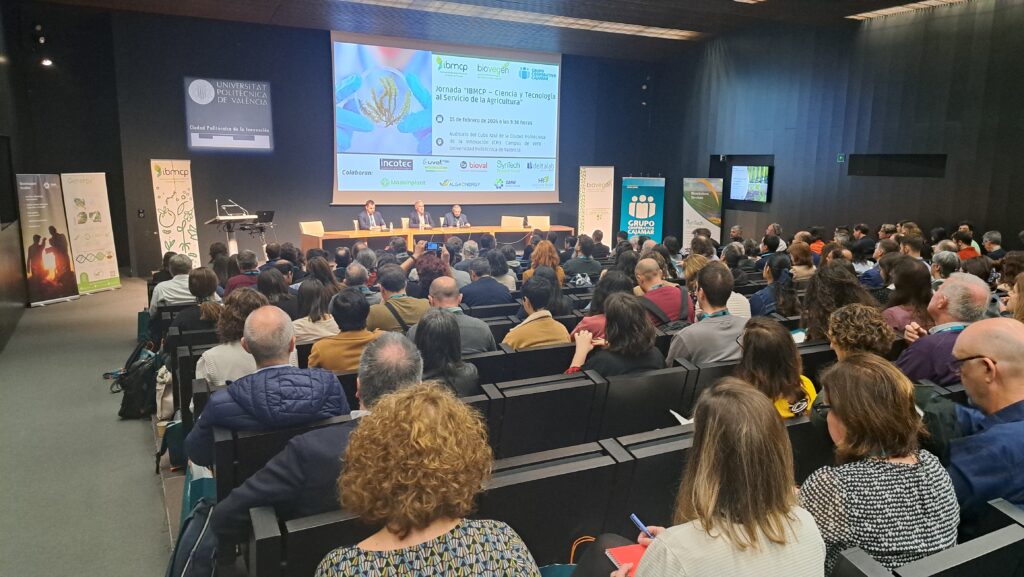
Valencia, 25-5-2026.- In many parts of the world, New Genomic Techniques (NGT’s) are the present of agriculture. In the EU, they are the near future, and this year the new community regulation in this regard will be published, although it will not come into force until 2028. Laura Zacarés, head of Technology Transfer at the Institute of Molecular and Cellular Biology of Plants (IBMCP), linked to CSIC and the Polytechnic University of Valencia (UPV) and recently recognized by the Government as a ‘Severo Ochoa’ center of excellence, advances the strategic change that is approaching and goes beyond this regulation: “The instability of recent years and the challenges faced by the agri-food sector have allowed biotechnology to enter the European geopolitical board at the same level and with similar momentum to the strategies to overcome dependence in defense, energy, the development of a domestic chip industry, and Artificial Intelligence (AI).” In this context and with the support of the biotechnology platform BIOVEGEN and the Cajamar Foundation, the ‘III Science-Business Day: Innovating the Future of Plant Biotechnology’ will be held on May 28 at the Blue Cube of the Polytechnic City of Innovation. The meeting, a genuine ‘summit’ of scientists and entrepreneurs linked to this sector, is expected to be attended by hundreds of professionals from across the country.
After more than a decade of turning its back on NGT’s, the EU is preparing a shift in its strategy. In parallel with the aforementioned new regulation, not only is an explosion of genetically edited crops expected, but also a new generation of biofertilizers, biostimulants – to regenerate the soil -, biopesticides – against pests without resorting to chemicals – and even genetically modified microorganisms (GMM, for its acronym in English) – that is, bacteria, yeasts, microscopic fungi, microalgae… genetically edited to perform a function such as producing a molecule, degrading a waste, or being used as additives, aromas, or to generate new foods. “The European agenda is marked by the challenge of reducing technological dependencies on third countries and developing own competencies, limiting the use of synthetic phytosanitary products and fertilizers, and in this sense, biotechnology plays a key role. The so-called Biotech Act – in cross-cutting terms – and the Omnibus package of food simplification point to an acceleration of the procedures to launch these biotechnological products,” advances Zacarés.
This specific issue will be precisely analyzed by one of the senior officials responsible for the Ministry of Agriculture (MAPA) who are technically driving the aforementioned legislative change process in Europe. It is Ana Judith Martín de la Fuente, secretary of the Interministerial Council of Genetically Modified Organisms of MAPA, who, taking advantage of the EU presidency held by Spain in 2023, worked to present a transactional proposal to close a common position of the Council, unblock the debates, and initiate the trilogue process that culminated in December, with a European agreement principle on NGT’s.
The day will be inaugurated shortly before by representatives of the three entities promoting the meeting: the director of IBMCP, Pablo Vera; by Jesús García, territorial director of Cajamar in Valencia, and by José M. Fontán, recently appointed president of BIOVEGEN, a platform that integrates almost 200 entities dedicated to biotechnology (the main research centers in the country and related companies) whose efforts focus on transforming basic research into concrete projects, into technological developments.
Market and climate change
NGT’s, despite the European delay in their regulation, are already a reality that will soon break into the markets. One of the panels led by David Lapuente, project manager of BIOVEGEN, will be dedicated to analyzing this issue. It will address the challenges of in vitro tissue regeneration, a critical phase for genetic editing to be effectively transferred to plants, which will be addressed by one of the reference IBMCP researchers, Alejandro Atarés; the impact of CRISPR on agriculture will be analyzed by Federico Grau, CEO of Madeinplant, a spin-off of this center and one of the few European companies capable of launching a new Cas protein with proprietary technology to edit crops; advances for the launch of ‘sentinel plants’ to detect biological threats before the damage is visible will be discussed by another scientist linked to IBMCP, Marta Vázquez; but the application of genomic editing in rice will also be addressed, thanks to the project that Luis Marqués, director of COPSEMAR, will present, or to obtain more nutritious and tasty tomatoes, a line of work directed by Antonio Granell, also from the CSIC-UPV center.
There will also be a block dedicated to ‘Resilience and adaptation to climate change’, moderated by Carlos Baixauli, director of the Cajamar Experience Center in Paiporta, which will focus on the biotechnological response to drought or the reduction of inputs. Participating in it, along with IBMCP researchers, will be representatives of leading national and international companies: Berta Rodríguez, from TIMAC AGRO, will review advances in microorganisms and volatile organic compounds for comprehensive plant stress management; Jorge Lozano (IBMCP) will present the Micropbiome project, aimed at new generation microbiological treatments; Juan Jesús Narváez, from Semillas Fitó, will explain how to reduce the ecological footprint through varietal selection; Javier Brumos (IBMCP) will detail the ‘Listening to Plants’ project, and Peter Visser, global Head of Crops R&D at BASF, will address the role of genetic improvement in horticultural production.
Zacarés (IBMCP), Baixauli (Cajamar), along with the director of BIOVEGEN, Gonzaga Ruiz de Gauna, will emphasize the need to establish alliances to ensure efficient technology transfer.
There will also be space to analyze the impact of plant biotechnology beyond agriculture: Diego Orzáez (IBMCP) will detail his research on geminiviruses produced in plants (taking advantage of the properties of viruses to turn plants into biofactories of vectors, viral components, or platforms useful for medicinal gene therapies); in a similar sense, J.A Darós (IBMCP) will talk about nanoparticles ‘decorated’ with antibodies produced in plants (modified plant viral particles, coated with molecules of biomedical interest); Julia Marín-Navarro (IATA-CSIC) will address the development of tailor-made enzymes for safe food and a sustainable industry, and Jesús Sánchez (IBMCP) will report on a new rapid test for virus detection in poultry farms.
And with a broader perspective, the day will culminate with the block ‘Biotechnology in a turbulent world: geopolitics, innovation, and sovereignty’, also moderated by Zacarés, with a luxury lineup: Oriol Alcoba, director of Innovation at ESADE; Roberto García, director of Sustainable Development at Cajamar; Emilio Rodríguez-Cerezo, from the Joint Research Centre of the EC; and Purificación Lisón, professor of Biotechnology at UPV and member of the GMO Network Subgroup NGTs of EFSA.
The closing, already in the late afternoon, will be carried out by Eduardo Pascual, regional secretary of Innovation of the Generalitat Valenciana, and Pilar González, head of the Dept. of Institutional Promotion and Territorial Cooperation of the CDTI.
Check the article at: